
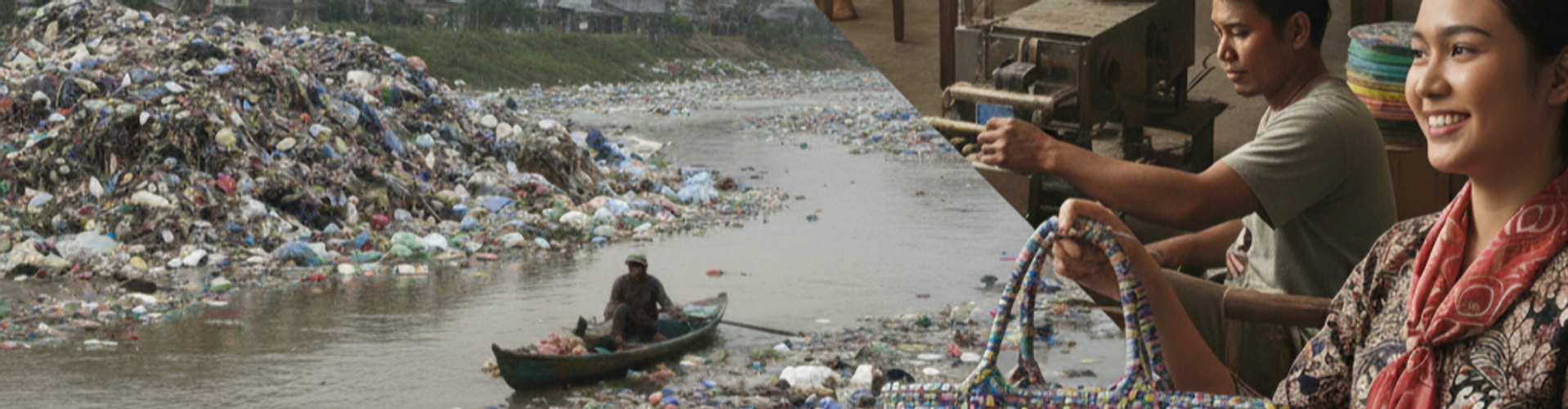
Significant waste challenge in Indonesia is not jus as a statistic, but a daily reality for many of us. Each year, Indonesia generated nearly 70 million tons of waste, with less than 10% recycled, and only about 39% properly managed according to latest government data – Indonesia’s find itself at critical juncture with existing system. Overflowing landfills, plastic pollution in rivers and oceans, and unsustainable consumption habits are putting immense pressure on the environment and economy.
But here’s the thing: this challenge is also a huge opportunity. The circular economy-a system where materials are reused, recycled, and repurposed continuously-offers a way to reduce waste and create real economic value.
For Indonesia, adopting circular economy principles is more than just good for the planet. It’s a strategic business move. By 2030, circular economy initiatives could generate and unlock $45 billion in economic value and create 4.5 million jobs, according to Ellen MacArthur Foundation. That means new markets, new products, and new ways to grow business sustainably. This shift can transform waste from environmental burden into a valuable resource which drive growth and innovation.
We’ve seen how firsthand how this works. Take East Java’s Xaviera Box project, which replaces Styrofoam with banana-leaf packaging that enriches the soil after use. Or Bali’s Maggot Farming initiative, turning organic waste into animal feed. Companies like Rebricks convert plastic waste into durable construction materials, creating green jobs and reducing pollution. On industrial scale, companies like PT Aneka Tambang recovers 85% of its nickel smelting waste for electric vehicle batteries and Toyota Indonesia recycles 92% of its automotive scrap into new parts. These are not just feel-good stories, they’re real, practical solutions that reduce waste, create jobs, and open new business opportunities.
However, Indonesia waste management system still has big hurdles and challenges. The nation is expected to fall short of its initial goal of achieving 100% waste management by 2025, which now has been extended to 2029. The majority of waste continues to be managed through basic collection with recycling infrastructure remains limited.
Moreover, cities like Jakarta continue to generate thousands of tons of waste every day, yet system still relies heavily on the work of 3.7 million informal waste pickers, most of whom work without adequate support. These persistence challenges highlight where business can make biggest impact. Improving waste collection systems, investing in recycling technologies, and working in partnership with government and communities to promote systemic and meaningful change.
For business, this is pivotal moment to take the lead. By adopting circular economy principles, investing in sustainable practices, and supporting communities integral to the system, companies can promote both economic development and environmental resilience. The path forward will require persistence, partnership, and more than that, benefit for both is more than the effort.
Indonesia’s commitment to circular economy is now reflected in Golden Indonesia 2045 vision and the newly introduce Circular Economy Roadmap and National Action Plan for 2025 – 2045. Government emphasizing circularity in vital sectors, from food and beverages to textiles and construction with policies aimed at energy efficiency, green innovation, and sustainable resources management. Collaboration is the fundamental to this plan, involving active participation between government, private sector, and communities to promote green economy and achieve country’s ambitious targets.
Research show that by fully adopting circular economy practices, Indonesia could create up to 4.5 million new jobs and add $45 billion to GDP by 2030, while significantly curtailing waste and emissions. Aligning business strategies with this national vision, companies not only safeguard their operations for the future but also but also play a role in building inclusive and sustainable Indonesia.